Practice Area

Products Liability

Defective products, design flaws, failure to warn — we show the jury exactly how the product failed, what could have been done differently, and why it matters.

Our Experience

Making Complex Engineering Failures Clear to Any Jury

Products liability cases demand that a jury grasp engineering, manufacturing, and design concepts that experts spend careers studying. Legal-eze specializes in making that complexity visual — and making the failure undeniable.

At the core of most products liability cases is a single, powerful argument: a safer alternative design existed, it was feasible, it would not have interfered with the utility of the product, and it would have protected the ordinary user. Our job is to make that argument visual — to show the jury not just that the product was dangerous, but that the manufacturer had a better path and chose not to take it.

We work closely with your engineering, safety, and medical experts to build exhibits that are technically accurate and ready for the toughest cross-examination. Whether you are litigating a defective vehicle component, a dangerous consumer product, or decades of tobacco industry concealment, our graphics team builds exhibits that carry your theory from opening statement through verdict.

What We Bring to Products Liability

Safer alternative design exhibits — side-by-side comparisons showing the feasible alternative that was available and would have prevented harm
Product diagrams and cut-aways — showing the defect, its location within the product, and the mechanism of harm
Failure mode exhibits — illustrating the sequence of events from design defect to user injury
Document chronologies — timelines showing when the manufacturer knew about the defect and what they did — and didn't do — about it
Warning label analysis — exhibits comparing what was disclosed to consumers versus what the manufacturer knew internally
Hot-seat trial tech — real-time evidence management for document-intensive products liability trials, including internal corporate records and deposition clips
The Core Argument

The Safer Alternative Design Framework

In products liability, the most powerful argument is often not just that the product was dangerous — but that a better design existed and the manufacturer chose not to use it.

01

A Safer Design Existed

The manufacturer had access to design alternatives that would have reduced or eliminated the risk of harm. This isn't speculation — it is documented in internal research, competitor products, and the manufacturer's own studies.

02

It Was Feasible

The safer alternative was technically and economically achievable. The technology existed. The cost was not prohibitive. The manufacturer had the resources and capability to implement it.

03

It Wouldn't Compromise the Product

The alternative design would not have materially interfered with the product's utility, function, or appeal to ordinary consumers. The product could have done what it was supposed to do — more safely.

04

It Would Have Prevented the Harm

Had the manufacturer adopted the safer design, the injury would not have occurred — or would have been substantially reduced. The defect caused the harm. The alternative would have stopped it.

Legal-eze builds exhibits around each element of this framework — giving the jury a visual structure they can apply to the evidence as they hear it, and carry into the deliberation room.

Case Study

Fontaine v. Philip Morris USA

A landmark products liability verdict illustrating the safer alternative design argument in tobacco litigation.
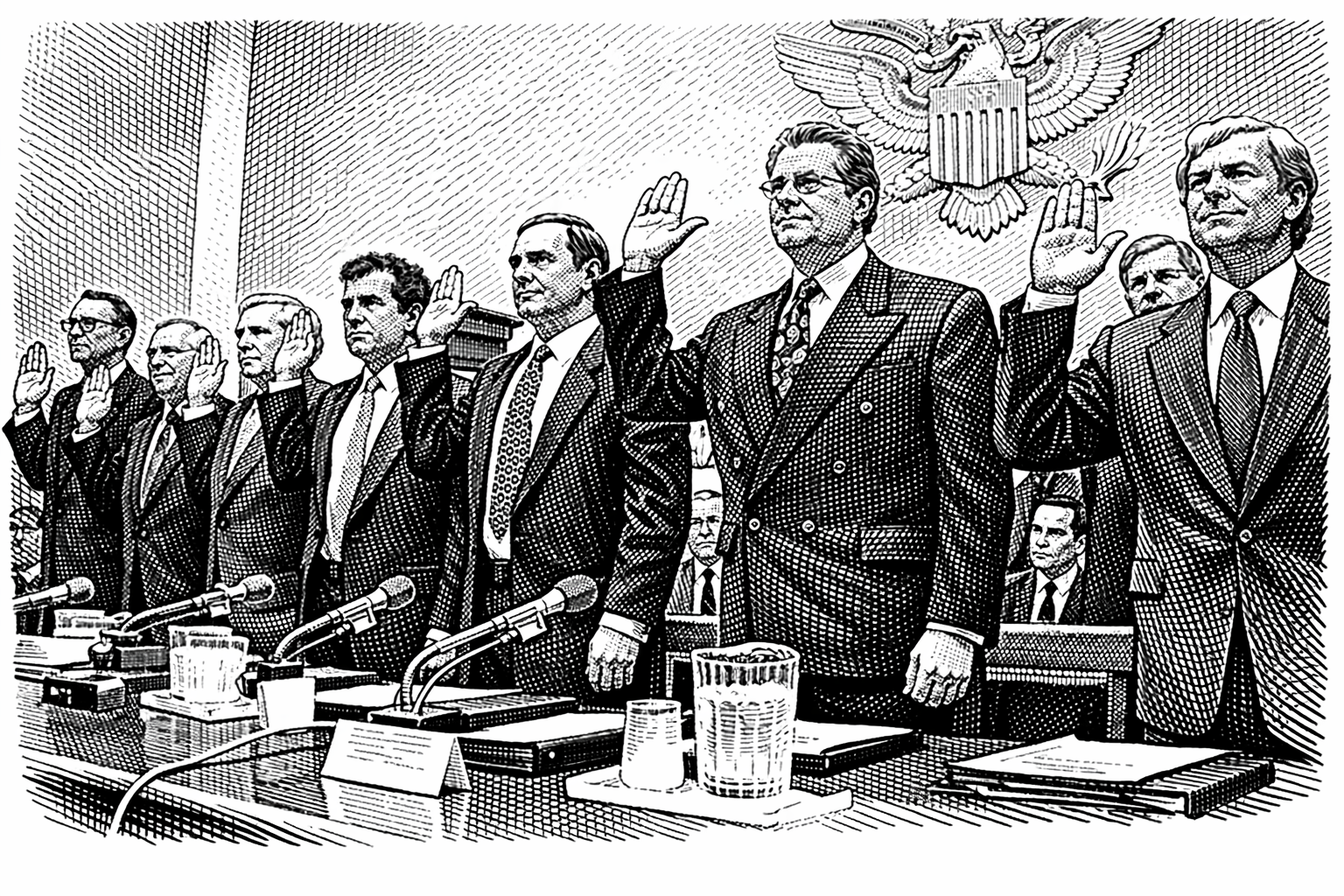
Tobacco industry executives being sworn in at congressional hearing

Tobacco industry executives take the oath before Congress - a pivotal moment in decades of litigation over what the industry knew and when.

"
In the Fontaine case, Legal-eze supported us at every stage from discovery through closing arguments. With Robert at counsel table and the Legal-eze team assisting remotely, it felt like having a full trial team to match opposing counsel, and their experience helped us secure justice for a deserving client. We don't go to trial without Legal-eze.
Randy Rosenblum
Randy Rosenblum, Lead Counsel Dolan, Dobrinsky, Rosenblum and Bluestein
Background

Barbara Fontaine smoked cigarettes for more than four decades. She developed fatal lung cancer. Her husband, Armand Fontaine, brought suit against Philip Morris USA, asserting that the company's decades-long campaign to conceal the dangers of smoking - and its deliberate choice to continue manufacturing cigarettes with dangerously high nicotine levels - caused his wife's death.

The Safer Alternative Design Argument

At the heart of the plaintiff's case was a products liability theory built on three feasible safer designs that Philip Morris had the ability to implement but chose not to:

  • Reduced or eliminated inhalation. The manufacturers had the ability to design cigarettes that significantly reduced or eliminated the inhalation of smoke into the lungs - directly addressing the primary pathway for lung cancer causation.
  • Heat-not-burn technology. Products that heat tobacco rather than burn it dramatically reduce the production of carcinogens. This technology was known and feasible. Philip Morris chose not to adopt it as its standard product.
  • Reduced nicotine to subaddictive levels. The company had the capability to reduce nicotine content to levels that would not cause or sustain addiction - which would have allowed consumers to make a genuine, informed choice about continued use. Instead, the evidence showed that nicotine levels were maintained and manipulated to sustain addiction.

Each of these alternatives was feasible. None would have eliminated the product. All would have materially reduced the harm to the ordinary consumer.

Philip Morris's Defense

Philip Morris argued that alternative designs - including lower-nicotine cigarettes - were commercially unviable because consumers did not prefer them. The company also argued that even with the alternative designs, cigarettes would still carry risk. Both arguments cut against the plaintiff's feasibility and causation theories.

Verdict
$8.014M Compensatory Damages
$1 Billion Punitive Damages
$1.008B Total Verdict - Plaintiff

Verdict for the plaintiff against Philip Morris USA, Inc.

Working a Products Liability Case?

Tell us about it — we'll respond within 2 business hours.

Start a Conversation